


Vynix
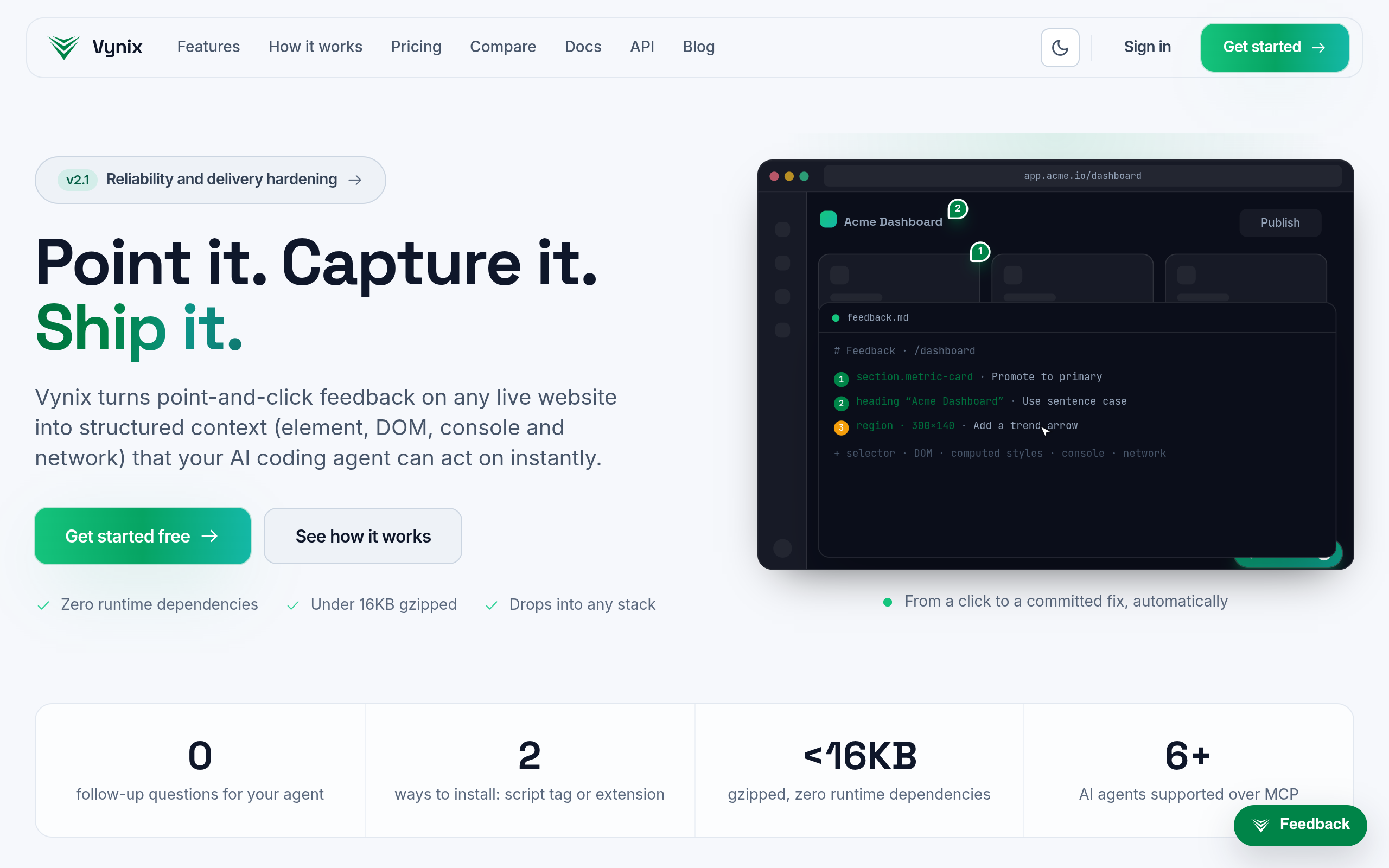
Vynix turns visual website feedback into structured context AI coding agents can act on: the exact element, DOM, console and network, plus a
Overview
Vynix turns visual website feedback into structured context AI coding agents can act on: the exact element, DOM, console and network, plus a native MCP server.
Vynix appears to transform visual feedback on websites into structured context that AI coding agents can utilize, capturing essential elements such as CSS selectors, DOM snippets, console errors, and network requests. It aims to streamline the process of reporting and fixing issues by providing acti
Sources behind this listingSee source links, recorded dates and owner corrections.
Observed facts come from public pages. Founder-edited facts are supplied by the verified owner. AI-inferred facts are model interpretations; derived facts are calculated from other data. A source link lets you check the current page. It does not guarantee the fact is still current.
Dates show when a record was saved. Some older records use the listing’s update date; they are not proof of a fresh check. Missing source records are shown explicitly.
- TaglineVynix turns visual website feedback into structured context AI coding agents can act on: the exact element, DOM, console and network, plus a
- Founder-editedRecorded Source: vynix.in
- DescriptionVynix turns visual website feedback into structured context AI coding agents can act on: the exact element, DOM, console and network, plus a native MCP server.
- Founder-editedRecorded Source: vynix.in
- Free planYes
- Founder-editedRecorded Source: vynix.in
- Free trialYes
- Founder-editedRecorded Source: vynix.in
- Pricing modelper_seat
- AI-inferredRecorded Source: www.vynix.in
- IntegrationsGitHub, Linear
- Founder-editedRecorded Source: vynix.in
- Plan: FreeFree
- AI-inferredRecorded Source: www.vynix.in
- Plan: Pro$19/mo
- AI-inferredRecorded Source: www.vynix.in
- Plan: Business$79/mo
- AI-inferredRecorded Source: www.vynix.in
- SummaryVynix appears to transform visual feedback on websites into structured context that AI coding agents can utilize, capturing essential elements such as CSS selectors, DOM snippet...
- Founder-editedRecorded Source link unavailable
Pricing
- seats
- 1
- projects
- 1
- annotations per month
- 50
- Element and region capture, freeze frame
- Templated AI prompt and Markdown export
- AI Diagnosis with your own key (BYOK)
- seats
- 1 to 10
- share links
- 25
- ai credits per month
- 500
- annotations per month
- unlimited
- Unlimited projects and annotations
- AI Diagnosis included · 500 AI credits/month
- GitHub issue creation and integrations
- seats
- unlimited
- share links
- unlimited
- ai credits per month
- 2500
- White-label and custom branding
- Unlimited share links and client portals
- SSO and advanced roles (SAML-ready)
Key Features
- Transforms visual feedback into structured context for AI agents.
- Captures exact elements, DOM, console errors, and network requests.
- Supports integration with GitHub for issue tracking.
- Offers a free tier with limited annotations.
- Provides AI diagnosis on demand.
Who Is It For
Web development teams and software engineers in small to medium-sized companies looking to improve their bug reporting and resolution processes.
Teams looking for a way to enhance their web development workflow by converting visual feedback into structured data that AI agents can process.
Organizations that do not utilize AI coding agents or those seeking a traditional bug reporting tool without AI integration.
Strengths & Weaknesses
Recent updates
- v1.0.0Release
Dates are the source's own. Release and feed entries come straight from Vynix's GitHub or changelog; Founder entries are posted by the verified owner.
Classification
Alternatives to Vynix
Community
No comments yet. Be the first to share your experience.