

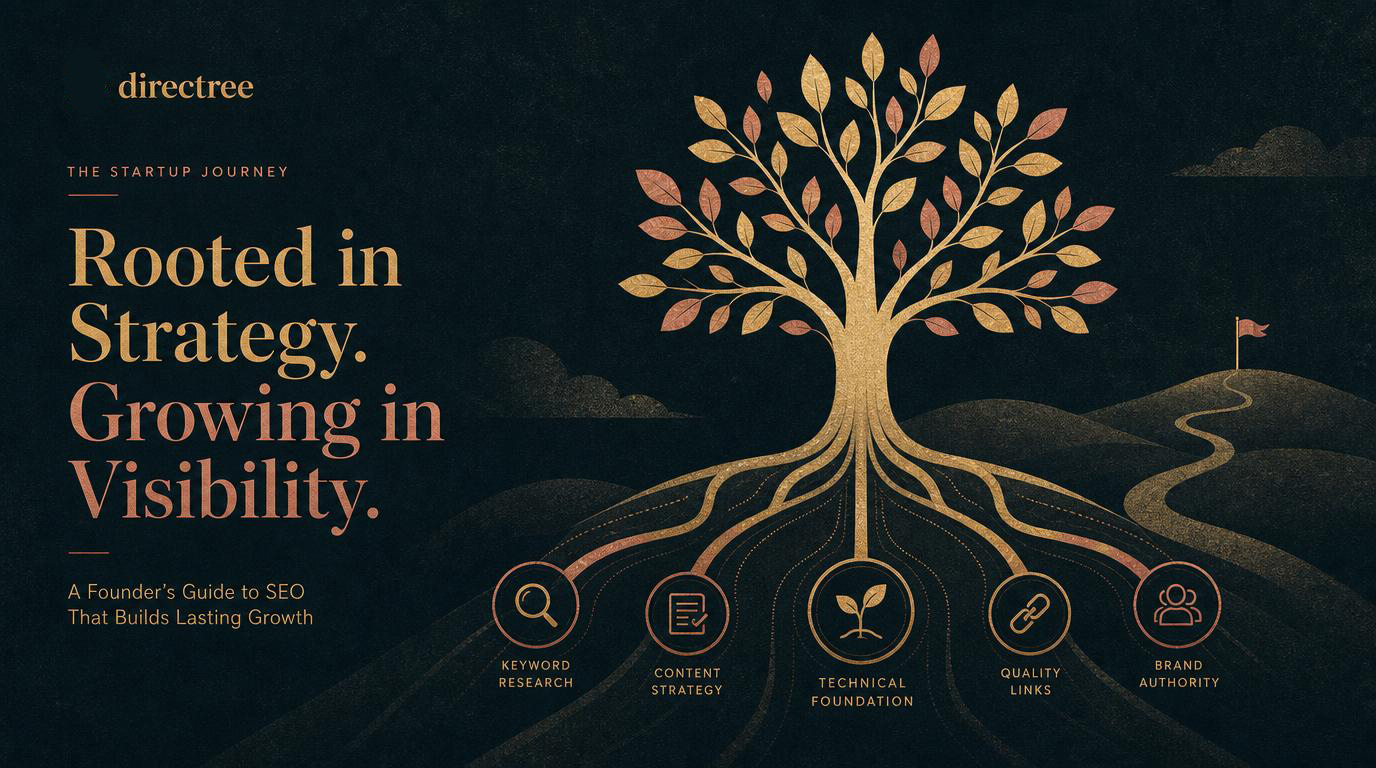
Most SEO guides are written for teams with money, content editors, and six months to spare. If you launched a few weeks ago, have one person doing everything, and you're not sure whether to spend your Friday on SEO or product, this is the guide you actually need.
No promises of page-one rankings in 30 days. No shortcut framing. Just what moves the needle in the first 90 days when you're starting from zero.
Why startup SEO is harder than most guides suggest
An Ahrefs study on organic search traffic found that more than 90% of all pages on the internet get zero organic traffic from Google (Ahrefs, 2020). Most content published online never gets found.
That's not an argument against SEO. It's an argument for doing it deliberately instead of generically.
Here's what you're up against when you launch:
- Zero domain authority. Google doesn't know you exist yet. Every site starts with no trust, no history, no backlinks. A great page on a new domain will usually rank below a mediocre page on a five-year-old domain, at least initially.
- No backlinks. Most traffic concentrates on pages that have external sites pointing at them. Getting your first 20-30 backlinks is harder than getting the next 100.
- No content history. Google learns what a site is about over months, not days. One blog post tells it very little.
- Competition from funded companies. For broad terms like "project management software," you're competing against teams that have spent years and millions on content. Don't fight that battle in year one.
None of this means don't do SEO. It means start smart, not with spray-and-pray SEO.
The 90-day playbook
1. Set up measurement first (Days 1-7)
Before writing a single piece of content, get your tools in place:
- Google Search Console - free, connects your site to Google, shows which queries are generating impressions and clicks. Submit your sitemap here.
- Google Analytics 4 or a simple privacy-first alternative like Plausible or Fathom. Track traffic sources from day one so you can spot organic growth when it starts.
- Submit your sitemap.xml - make sure Google can find all your pages. Most frameworks generate this at
/sitemap.xmlautomatically; check it exists and submit it in Search Console.
This takes about 30 minutes. Do it on day one. You want 90 days of data by the time you're making SEO decisions.
2. Find 5-10 keywords you can actually win (Days 7-21)
This is the most important step and the one most founders rush or skip.
Don't target "CRM software" or "project management." You won't rank for those. Instead:
- Go long-tail and specific. "CRM for freelance designers" or "project management for architecture firms" are winnable for a new site. Head terms are not.
- Look for low-difficulty terms with real search intent. Free tools that work well: Google autocomplete, Google Keyword Planner (free with any Google Ads account), and the free tier of Ahrefs Webmaster Tools or Ubersuggest for difficulty estimates.
- Check who's currently ranking. If positions 1-5 are all Salesforce, HubSpot, and SEMrush, find a different angle. If it's Reddit threads and small personal blogs, that's your signal to go after it.
- Prioritize informational and problem-aware terms. Early-stage, "how to do X without Y" and "best Z for [specific use case]" are more achievable than competitive transactional terms.
One keyword per page. Don't stuff multiple targets into one piece of content.
3. Build a content foundation (Days 15-90)
Content is the long game. One post a week beats five posts in a sprint and then silence. Google rewards consistent, indexed activity.
For a SaaS startup, the highest-impact content to write first:
- Landing pages for your main use cases. Not just your homepage. A dedicated page for each job-to-be-done your product handles, each targeting a specific query.
- Problem-first blog posts. "How to track X without a spreadsheet" or "Why Y keeps breaking for small teams." Write 800-1,400 words of genuinely useful content. Don't pad. One keyword per post.
- Comparison content is tempting early on but hard to rank without authority. Save it for month four or five.
After you publish, share each post in two or three niche communities where your ideal customer actually spends time. Early engagement and traffic signals help.
4. Get your first backlinks (Days 30-90)
Links from other sites pointing at yours are still one of the biggest ranking factors. This is where most new sites stall.
Practical, non-spammy ways to earn early backlinks:
- Software directories. Getting your tool listed on relevant, honest directories gives you do-follow backlinks quickly and puts your product in front of people actively looking for solutions. It's one of the fastest legitimate wins for a new SaaS.
- Be a source for writers and bloggers. Tools like Connectively (the HARO successor) or simply responding to X/LinkedIn posts where people ask for tool recommendations in your space.
- Write a genuinely useful resource. A free tool, a public dataset, a definitive guide. Something people naturally want to reference.
- Two or three targeted guest posts. Not mass-scale guest posting, just well-placed posts in niche publications your audience reads.
Cold email link outreach in month one is usually a time sink. Unless you have a specific relationship or an exceptional piece of content, response rates are too low to justify the hours.
One concrete step today: get a free, honest, do-follow listing on directree. Paste your URL and get a structured listing in about 30 seconds. It's one early backlink and one more place people searching for tools can find you.
Submit your tool5. Fix the technical basics (Days 1-30)
Technical SEO doesn't need to be complex at the startup stage. The 20% of technical work that matters:
- Core Web Vitals. Use Google PageSpeed Insights to check your scores. Slow LCP or bad CLS will drag rankings down, and it's fixable.
- Mobile-first. Your site must work well on phones. Test it on an actual device, not just a browser dev tool.
- Clean URL structure.
/blog/keyword-rich-titlebeats/blog/post?id=12. Descriptive slugs help both users and Google. - No broken links or crawl errors. Check Search Console's Coverage report after a few weeks of being live.
Don't go down a rabbit hole of schema markup and structured data in month one. It matters eventually, but it won't move the needle when you have 10 pages indexed.
Common mistakes founders make
Targeting competitive keywords too early. "Best CRM" or "SEO tools" will bring no traffic for years. Start niche, earn authority, expand later. This is probably the most common wasted effort.
Publishing and disappearing. One post a month with no promotion or internal linking won't compound. Consistency beats sprints.
Expecting results in 30 days. Most new pages take 6-12 months to stabilize in rankings. This is normal, not a failure.
Ignoring the audience you already have. If you have even 50 email subscribers or 200 social followers, distributing your content there builds early signals. Don't rely solely on Google in year one.
Skipping on-page basics. Your title tag, H1, and meta description should include your target keyword. This is a five-minute fix per page that many sites miss.
Assuming more volume equals more traffic. Google's spam systems are much better at detecting AI-generated thin content published at scale. Fewer, genuinely useful pages outperform hundreds of low-quality ones.
Honest timeline expectations
Here's what to realistically expect, not what you'll read in most growth blogs:
| Timeframe | What's happening |
|---|---|
| Days 1-30 | Google finds and indexes your pages. Little to no traffic. Normal. |
| Months 1-3 | Impressions start appearing in Search Console. Long-tail terms may crack positions 50-100. |
| Months 3-6 | First real organic visitors arrive. Some long-tail terms hit page 2 or 3. |
| Months 6-12 | Rankings stabilize. If you've been consistent, a real organic channel starts forming. |
| Months 12-18 | The compounding begins. Earlier content gets stronger. Topical authority builds across your cluster. |
Ahrefs research found that only about 5.7% of newly published pages reach Google's top 10 within a year of going live (Ahrefs, how long does it take to rank). That number isn't an argument for giving up early. It's an argument for starting now and staying consistent.
Don't judge SEO as a channel in the first six months. Judge it at month 12.
Where directree fits
For a new SaaS, getting listed in relevant, honest software directories is one of the first things worth doing. Not because it'll flood you with signups overnight, but because:
- You get a do-follow backlink from a domain Google can read as legitimate.
- You appear in a place where people actively search for tools like yours.
- Structured, accurate data about your product helps AI search engines (like ChatGPT and Perplexity) understand and potentially recommend you. This matters more than most founders realize in 2026. If you're not familiar with that angle, our guide on how to get recommended by ChatGPT is worth reading alongside this one.
directree is free. You paste a URL, get a structured listing in about 30 seconds. Every field is clearly labelled as observed, AI-inferred, or founder-edited. No fake scores. No pay-to-rank. Submit your tool here.
It's one step in a longer playbook, not the whole answer. But it's a fast, zero-cost step you can take right now.
FAQ
How long does SEO actually take for a new startup?
Plan for 6-12 months before SEO becomes a reliable traffic channel. You'll see early signals (impressions, occasional clicks) in months 2-4 if you're targeting the right keywords. Meaningful traffic that actually affects your business typically arrives around month 6-9 for well-executed campaigns on a new domain.
Do I need to hire an SEO agency?
Not at first. The fundamentals in this playbook are things a founder can do themselves. An agency starts making sense when you have product-market fit, some revenue, and you want to accelerate. At the zero-to-one stage, that money is often better spent on a good content writer or a tool that helps with keyword research.
Is SEO worth investing in if my startup might pivot?
Yes, with a caveat. Domain authority, backlinks, and indexed content carry across pivots if your domain stays the same. Target keywords broad enough that they'll still be relevant if your product focus shifts. Don't build all your SEO around a single feature you might cut.
What free tools should a founder use for keyword research and tracking?
Google Search Console (essential, free), Google Analytics 4 (free), Google Keyword Planner (free with any Google Ads account), Ahrefs Webmaster Tools free tier, and Google PageSpeed Insights. That covers keyword research, ranking tracking, and technical audits without paying anything in year one.
Should I focus on SEO or social media first?
It depends on your product and where your audience is. SEO is a longer-term compounding channel; social delivers faster feedback loops and community. Most solo founders should do a bit of both rather than going all-in on one. SEO is worth starting early precisely because the timeline is long. Social can fill the gap while SEO matures.